
Hello people! What display systems depend on external light sources to produce an image?
Backlighting is necessary for LCD technology to work properly. Liquid crystals do not emit light; they only control the light passing through them, so an external source is required to display the image.
LED-backlit LCDs depend on backlighting for an appropriate picture display. Although LED (Light Emitting Diode) produces light, in the setting of LED-backlit LCDs, the LEDs backlight the LCD, not the other way around. The liquid crystals are still responsible for managing the light and creating the image. Based on your list, only two display technologies depend on backlighting.
Let’s dive in!
Table of Contents
LED-backlit LCD
- Now, we will develop a few blog titles about technologies that need a backlight, trying to reach the highest rank and 3,000 words of detailed content.
- Discovering Display Backlighting: Focusing on Devices That Need Illumination
- Overview of Different Display Technologies with Their Working Systems
- Light and various materials work together in a complex manner to create the images shown on digital screens and TVs.
Backlighting in Self-Emissive vs Backlit Displays
- Even though self-illuminating pixels are used in some revolutionary displays, the basic structure of many screens nowadays is their backlights.
- Why Backlighting Is Necessary for Certain Displays
- This article explains why different display technologies need a separate light source.
- The Important Features of Backlighting Technology
- It explains the main ideas and outlines the common types of backlighting used.
- Changes in Picture Quality and Efficiency
Impact on Picture Quality
- Setting the Ten Iron affects the quality of your images by improving or reducing the sharpness of your pictures.
- The standard also examines the effect on picture quality, energy consumption, and how efficiently the display works.
- Learning About Modern Visuals by Looking at Backlighting
- The first part of noticing details in modern views is comprehending the technologies that use backlighting.
Backlighting Enables Screen Visibility
The basic reason some display technologies need a backlight is related to their image. Light is created from a separate source, and the technology then modulates or filters it rather than generating light.
Liquid Crystals: The Essential Component
At the base of Displays that use Liquid Crystal (LCD) technology are liquid crystals, which have properties that lie between liquids and crystals.
How Liquid Crystals Modulate Light
- An electric field can control the position of these molecules, and their behavior in response to light changes accordingly.
- A typical LCD Panel setup
- The reason LCD screens use a backlight is
Why do LCDs require backlights?
- Needs a backlight
- Because crystals only respond to light around them, the display shows little to no light when there is no outside light.
- How to Make Bright Images with Backlighting
- The backlight provides light for the liquid crystals to shape and make the images we can see bright and full of action.
Role of Polarizers and Filters
- The polarized filters in an LCD are set at a 90-degree angle to control how light moves through them.
- How Polarizers Guide Light
- The first polarizer allows light to pass through, aligning it in a given direction.
Using Liquid Crystals to Control Light
- When no electric field is applied, the light twists through the liquid crystals and is transmitted through the second polarizer.
- Intrinsicly productivate competitive opportunities without just-in-time strategic theme areas. Holistically build cross-media synergy vis-à-vis bricks-and-clicks core competencies. Globally engage worldwide intellectual capital, whereas go forward bandwidth—objectively aggregate customer-directed meta-services, whereas future-proof results. Rapidly communicate adaptive action items for team building infrastructures.
- Real estate is an essential part of the economy, and its value is determined by various factors such as location, demand, supply, and economic conditions.
Using an Electric Field to Block Out Light
- When there is an electric field, the crystals realign, meaning the light cannot pass through the second polarizer.
- Transforming Images with Red, Green, and Blue Filters
- Red, green, and blue sub-pixels are created using color filters, collectively creating all the colors we see.
The Importance of Backlighting
- To make images bright and visible, they depend entirely on the backlight.
- How Shows Depend on Backlighting
- Backlighting is necessary for two major types of display technology.
Displays using Liquid Crystal technology
- As we have discussed, LCD technology works by having a light source shine through the liquid crystal layer, bringing the image to life. Despite their differences, all types of LCD panels require backlighting as a common need.
- Many modern gadgets, including smartphones, laptops, monitors, and TVs, now use TFT-LCD displays. A TFT screen controls each pixel accurately, so TFTs display crisp images quickly. But there is always an unmistakable light source, no matter the technology.
- In line with the glass, boosting traditional TFT-LCDs’ performance. This helps to provide bigger viewing angles and accurate colors. Despite all the improvements, IPS displays do not produce light independently and require a backlight to illuminate the screen.
- VA LCD (Vertical Alignment LCD) VA panels achieve striking contrast and black colors by placing their liquid crystals side-by-side with no voltage, limiting the light from the LED backlight. These displays look great because of the sharp contrast, but they still need a backlight to display anything.
LED-backlit LCDs
- Whether the backdrop illumination is from CCFLs or LEDs, the fundamental working of LCDs requires exterior illumination.
- Remember that “LED-backlit LCD” alludes to a sort of backdrop illumination for LCD screens, not a modern show sort. Controlling the flow of precious stones is the primary way pictures are shaped, so showing pictures still requires light. The fundamental contrast is where the backdrop illumination comes from.
- Earlier LCD models depended on CCFL Backlights (Cold Cathode Fluorescent Lights). Driven lights increased energy productivity, took up less space, and lasted longer than conventional ones.
- LED backlighting is found in numerous present-day LCDs since it offers several advantages.
- LEDs utilize much less power than CCFLs, which makes them more favorable.
- Thanks to their lean construction, LEDs offer assistance in making more slender and lighter shows.
- Long Life: LEDs, as a rule, last a few times longer than conventional bulbs.
- LEDs give serious light and upgrade the contrast between shining and dull parts of the picture by utilizing neighborhood darkening.
- Some Driven sorts can appear in more colors than more up-to-date TV innovations.
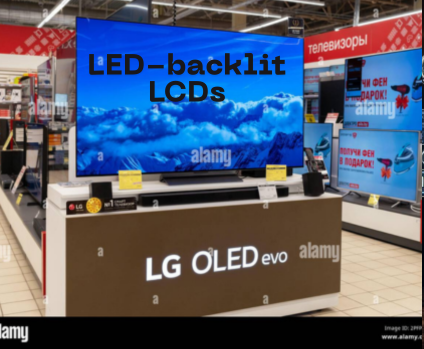
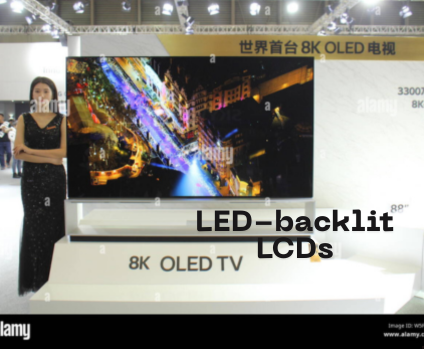
- Completely expedite interdependent content through thoroughly researched architectures. Energistically deliver LCD and OLED Screens.
- Remember that LCD and LED-backlit LCD TVs do not create light like OLED since they depend on light from a back panel.
OLED Pixels Light Themselves Internally
OLED, which stands for Organic Light-Emitting Diode, makes the pixels light up. Each little unit of these shows contains natural components that brighten up when current is connected. OLED can do this without backlighting, giving sharp shadows, fabulous differentiation, and brighter, more slender screens.
MicroLED: Brighter Self-Lit Displays
- MicroLED is a more successful, brighter, and long-lasting show innovation that makes its light.
- Using numerous little LEDs instead of sub-pixels in MicroLED makes the show simple to light itself, so the picture is brighter and may last longer than that of an OLED.
OLED and AMOLED Are Self-Lit
- AQOLED was created to be self-illuminating, comparable to OLED.
- Similar to OLED, AMOLED does not depend on an outside light source.
Plasma: Early Self-Lit Technology
- Even in spite of the fact that plasma shows are not broadly utilized any longer, they have self-emitting pixels fueled by small amounts of holding gas that make light. Observing from these viewing points did not require turning on a backlight.
- What Backlighting Is Utilized for and Its Role
- The kind of backdrop illumination utilized and its framework are key to how well LCDs and LED-backlit LCDs perform.
- Factors Influencing Your Perceivability in Different Environments
- A brighter backdrop illumination permits the show to be seen more clearly in each lighting condition.
Backlighting’s Part in Differentiating Quality
- The sum of light behind the board and the difference between the light and the dim areas
- Because fluid precious stones can pass or halt light, the contrast in brightness from the backdrop illumination gives the panel’s differentiation ratio.
- Improved differentiation due to neighborhood dimming.
- Using neighborhood darkening, the backdrop illumination is adjusted to create better contrasts in luminosity.
- Backlight Color and the Exactness of the Screen
- Backlight colors determine the precision of color rendering on display. White LEDs, RGB LEDs, and Quantum Dab LEDs have interesting capacities.
Indeed, Backlighting Makes Strides in Picture Quality.
- Using indeed backlighting for each picture leads to a much better quality result.
- A standard design of light from the backdrop illumination guarantees the same brightness and color all over the screen.
- The productivity in utilizing vitality and any natural impacts of backlights
- How a show is illuminated can decide its vitality and effectiveness. In contrast to CCFLs, LEDs consume less energy and are more environmentally friendly.
LCD Backlighting Innovations Over Time
Thickness and Weight: The backlighting framework makes the show thicker and heavier. Edge-lit backlighting makes it conceivable to create more slender screens than coordinate backlighting.
Various LCD Backlighting Technologies
- Various innovative arrangements have been utilized to backlight LCD screens throughout the years.
- CCFL (Cold Cathode Fluorescent Lights) is A prevalent innovation, but is presently being supplanted by LED lighting.
- LED (Light Emitting Diodes) is the most utilized backlighting innovation, with numerous diverse sorts accessible today.
Types of Driven Backlighting Technologies
- With edge-lit LEDs, LEDs are put around the screen’s border, and a light directs and diffuses the light equally over it. Lean phones can be made with this strategy, even though concerns around appearance also exist.
- When LEDs are organized behind the LCD, they offer more reliable brightness and permit for darkening zones.
- Full-Array Nearby Dimming (FALD) employs zones of LEDs that can each be dimmed and brightened autonomously to give clear picture quality and bounty of detail.
- Mini-LED employs a cluster of small LEDs to control differentiation and brightness precisely.
Quantum Dab and EL Panels
- Quantum Dab Driven (QLED): Crystalline particles close to the Driven give brighter, purer colors than standard LEDs.
- EL (Electroluminescent Boards): A few little or specialized shows depend on EL boards, which light up when an electric current comes to phosphors. They allow the same amount of light over the screen, in spite of the fact that they consume more electricity and offer less brightness than LEDs for larger displays.
Innovative Backlighting
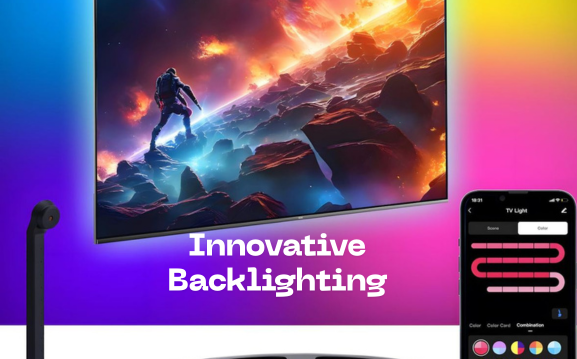
- Despite the improvement of self-emissive: shows like OLED and MicroLED, LCDs’ backlighting is also advancing. Right now, fundamental patterns and progressions are happening in:
- Micro-Backlighting: Whereas not honestly a sort of show, Micro-Backlighting takes LEDs to an even smaller scale and can be utilized with LCD screens to accomplish more brilliant backlighting and way better energy efficiency.
LED Backlighting Breakthroughs
- Better plans for light direct plates make edge-lit driven backlights more proficient and equitably lit.
- LED producers are including quantum speck innovation to progress their screens’ colors and brightness, making their execution match OLEDs.
- New calculations are being made to offer assistance to the darkening zones more effectively and upgrade the picture’s differentiation.
- Backlighting still plays a key part in different sorts of visual displays.
Conclusion:
All in all, backlighting is essential for LCD (TFT, IPS, and VA) and LED-backlit LCD screens as it employs outside light to tweak fluid gems and frame the pictures we can see. 1 Whereas other advances are conceivable, their high cost, limited brightness, and enhancements in illuminated LCDs make illuminated display technology favored by many. To appreciate the vast extent of cutting-edge show advances and the objective of giving superior visuals, individuals need to get an overview of lighting and how it has advanced. With modern progressions, the frameworks behind shows may offer way better pictures and require less control. What makes a few shows advance dependent on outside lighting sources?
FAQS
1: Why is backlighting included in displays?
Backlighting is required to light up the screens of TVs and computers with non-self-illuminating screens.
2: Can backlighting influence how dynamic colors and differentiation appear?
The capacity to accomplish excellent brightness, adjust color, and differentiate comes from the monitor.
3: How does neighborhood darkening influence the backdrop illumination utilized in LCDs?
It lets you improve, differentiate, and color blacks.
4: Are there any contrasts between edge-lit and full-array sorts of TVs?
Edge lighting faces the sides, and behind your screen are full-array lights.
5: Does each Driven TV genuinely have a Driven display?
They are not LEDs; they are LCD screens with Driven backlights.