

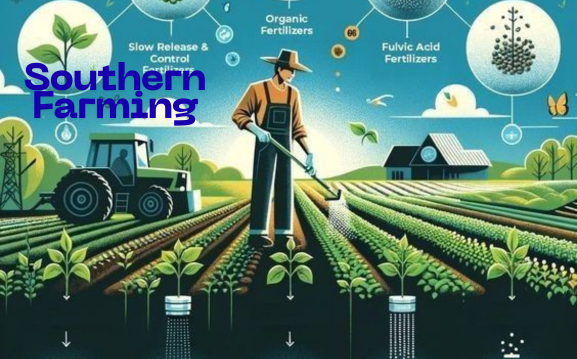
Hello people! What impact has innovation had on Southern US agriculture?
Technology has been an amusement changer as far as Southern United States agriculture is concerned. Southern cultivating, which was once around manual labor and conventional forms, has changed significantly with the introduction of new methods and new devices. These improvements delivered by the cotton gin since its innovation and till nowadays, when precision agriculture was developed, have made the cultivating industry more beneficial, less labor-intensive, and reshaped the economy of the rural districts.
The enhancement of water systems, mechanization, biotechnology, and advanced innovations is one of the regulatory changes that have made a difference for agriculturists to get more out of fewer assets when farming. In the story of the South, the student of history has to understand how innovation influenced the process of cultivating and how this impact has continued to be. The suggestions of innovation in farming have to be considered so that cultivating proceeds to develop towards a sustainable society.
Let’s dive in
Table of Contents
Antebellum Manual Agrarian Economy
The pre-Civil War period saw a large amount of manual labor, particularly by subjugated individuals, in the South in the field of agriculture. Southern manors were filled with crops like cotton, rice, sugar, and tobacco. The sorts of hardware were essential, and development took so much time and effort. The process of cultivating was primarily done by taking after conventional ways of doing things, and not based on knowledge.
The Cotton Gin: A Specialist of Change
The cotton gin is a gadget that was designed by Eli Whitney in 1793, and it changed the face of Southern agriculture by mechanizing the cotton-cleaning process. This development alone saw a tremendous spread in cotton production, which in turn made cotton a driving export, thus making the institution of slavery more entrenched in the South. It reflected the two-sided character of innovation, financial success, and more prominent dependence on human slave labor.
Civil War Agricultural Disruption
Southern agribusiness was genuinely disturbed by the American Civil War (18611865). The arrival was plagued, the framework of work disintegrated, and the economy was destabilized. The conclusion of subjugation compelled the South to rethink its adaptation of an agrarian working framework. Liberation required the Southern ranchers to either select previously oppressed individuals or alter their practices in an alternative way, and this led to the adoption of mechanized solutions.
Technological Stagnation Period and the Sharecropping Phenomenon: What Happened to Sharecropping?
Post-Emancipation Sharecropping Struggles
After liberation, sharecropping became prevalent among the Southern ranchers. This framework moreover allowed assist improvement in agribusiness, in spite of the fact that this framework tended to be exploitative and had an uninviting nature to development. There was a slack in the retention of innovation, with southern ranches operating in a cycle of poor productivity and excessive dependence on labor. Destitute credit frameworks and racial disparities, moreover, constrained present-day instruments.
The Mechanization Age: Tractors and Plows
Tractors and mechanical plows were to supplant donkey and bull labor by the turn of the 20th century. These machines have hugely raised efficiency. They were too costly and might not be available to most small agriculturists in the south. The massive operations were picked up at the cost of the destitute inhabitant ranchers, who were made much poorer than the agrarian landlords.
Agricultural Research and Education
Scientifically based methods of cultivation were brought in through land-grant schools and agrarian expansion programs. The Southern ranches began to experience an enhancement in yields with developments in the agricultural revolution, the use of fertilizer, and soil management. Logical cultivation was moreover a basic association between the conventional and advancement, and it made a difference in advancing a more cutting-edge and profitable strategy of farming.
Irrigation and Water Management
New water system procedures permitted Southern ranchers to utilize soil that was already unacceptable for planting. Turn water system, the utilization of dribbles, and made strides in seepage frameworks empowered crops to be developed year-round, indeed in parched districts such as parts of Texas and Georgia.
Green Transformation and Half breed Seeds
The Green Insurgency of the mid-20th century was the set of innovations that involved genetically modified seeds, fertilizers, and pesticides. These innovations made a radical alteration in trim yields and diminished dangers related to trim failure. Cultivating in the South picked up noteworthy results and particularly expanded corn, soybean, and cotton production.
The Animals Cultivating Technology

The South was moreover advantaged in the angle of animal farming, which got an innovative facelift. Meat and dairy production were boosted by the application of computerized feeding systems, artificial insemination, superior breeding strategies, and disease control strategies. These advancements made southern states like Texas pioneers in the generation of hamburgers in the United States.
Mechanized Cotton Harvesting Rise
It is since with the expanded mechanization of cotton-picking, specifically, in the 1940s-50s, the demand for manual labor diminished significantly; in doing so, this expanded effectiveness came at the cost of mass unemployment of rural laborers, specifically African Americans, which propelled waves of rural-urban relocation to cities in the North.
Farming Decline, Agribusiness Rise
As the innovations permitted managing with economies of scale, Southern farming was continuously overwhelmed by giant agribusinesses. The little family ranches might not compete. With this move, there was more monoculture farming, corporate concentration, and a reconstituted rural economy that was more centered on benefit edges as opposed to community supportability.
Exactness Horticulture & Data Technology
Over the past few decades, Southern horticulture has experienced an insurgency due to the utilization of advanced technology that has made the industry data-driven. With the accuracy of the agribusiness framework, ranchers have been able to control crops down to the most minor division by utilizing GPS, rambles, soil sensors, and AI. The procedures minimize wastage, protect fabric, and achieve optimal production.
Biotech and GMOs
The presentation of GMOs affected Southern horticulture emphatically. Modernization of crops, in which editing was heritarily altered concerning bug resistance and resistance to dry season, empowered Southern agriculturists to guarantee steady harvests even in such a hazardous climate. Biotechnology was another innovation that diminished the use of chemical pesticides, hence making it more ecologically sustainable.
Technological Adjustments and Climate Change
The other challenges brought on by climate change to Southern horticulture include extreme climate conditions, dry seasons, and surges. Innovation has been central in making it beyond a doubt that agriculturists can change. Fiasco administration frameworks, climate forecast instruments, and the advancement of modern drought-responsive crops are necessary.
Automation in Southern Agriculture
This mechanization is being cornered with mechanized tractors to automated natural product pickers, which is starting to be a commonplace standard in Southern agribusiness. The advances will be utilized to address the labor shortage and increase effectiveness. By the by, this alter can, as it were, be compelling when cash, preparation, and arrangement are contributed in supporting it regardless of the size of the farm.
Sustainable Tech and Ecology
Southern horticulture is becoming responsive to the use of economic innovation as natural mindfulness increases. Natural cultivating, less chemicals, regenerative farming, decreased chemicals, and renewable vitality in the ranches are progressively being grasped. The South is right now working on the thought of an adjustment between maintainability and productivity.
Technological Get to and Government Policies
These approaches, including government and state rules, have either empowered or debilitated access to innovation in Southern agriculture. Inquire about the financing, awards, and appropriations that have contributed to the modernization of most of the operations. By the by, the arrangement of crevices and the failure to reach agriculturists in rural regions continue to remain an issue with access to advanced devices for some farmers.
Social Impact of Agrarian Innovation
The changing innovative drift has changed the financial circumstance not only in the south but also in society. The impacts of innovation can be seen not only in the field but also in instruction, contracting, and indeed the soundness of a community due to changes in labor relations and statistical shifts among the rural population.
Technological Move Instruction and Training
Farming is turning into a more mechanical undertaking, and instruction and preparation play a noteworthy part. Southern states are beginning to speculate by developing agribusiness-wise students through colleges and trade schools, as well as community software engineers in agricultural education, to have the next era of tech-savvy farmers and farming professionals.
Mechanical Transformation in Nut Farming
Georgia is one of the biggest producers of peanuts and gives the best case of how the field of farming has been changed by innovation. Coordinating exactness planting, bug reconnaissance frameworks, and modern water systems have developed generation and made a difference in the industry to be safer and productive.


Barriers to Agricultural Technology
Although there are apparent focal points, the issue of selecting innovation has been hampering numerous agriculturists in the South. These are budgetary issues, no access to the web in rural areas, change resistance, and deficient back-end frameworks. The narrowing of these crevices is the key to comprehensive rural development.
Inclusive Tech Adoption
Minority ranchers and female agriculturists in the south are starting to utilize rural innovation in increasing numbers. Plans that aim to engage the underrepresented communities are empowering them to access instruments, instruction, and subsidies. This consolidation is the fundamental characteristic of reasonable improvement of the rural industry.
Future Southern Agriculture
The advancement of such patterns as counterfeit insights, vertical farming, application of blockchain to supply chains, and climate-smart farming will keep impacting the scene in southern agriculture. To stay at the front, policymakers have to work together with agriculturists, teachers, and tech engineers. Instead of an epilogue, it is suitable to provide a conclusion, which is an Innovative Renaissance in the south.
The effect of innovation on southern agriculture
Technology has revolutionized Southern agribusiness into an exceedingly differentiated, cutting-edge, and more sustainable agricultural framework based not only on farms. Indeed, even though different impediments still stand in the way, there is a straightforward way towards advancement, grasp, and keen advancement. The South is on the brink of becoming the epicenter of another transformation in the agrarian world, with more speculation and education.
Conclusion
The advancement of innovation has significantly changed the face of agriculture in the South, modifying the way agriculture has been carried out in the region. From the innovation of the cotton gin to the development of advanced tractors and collectors, advancements have reliably expanded efficiency and productivity. Biotechnology expanded the yields of crops that were less vulnerable to pests, and the development of water systems gave individuals more control over the water.
The development of precision agriculture came with the integration of GPS and field data, enabling ranchers to make informed decisions based on real-time data. Such advancements expanded the population, despite being linked to significant social and economic changes, including a decline in manual labor and the restructuring of rural society.
The modern innovation might not be met by smaller ranches at times, as the greater agribusiness flourishes. Be that as it may, through preparation and support, numerous Southern ranchers managed to balance themselves. Environment-friendly homes are currently being developed due to the rise of economic and climate-friendly innovations, avoiding the depreciation of assets in the long run.
These days, innovation is no longer a gadget; innovation has become a companion in horticulture, and innovation coordinates planting through gathering. With the changing and more challenging showcase situations, the Southern agrarian industry has not ceased to improve, holding on to its history but moving on to a more shrewd and naturally inviting future. Will progressive innovation shape the future of Southern agriculture successfully?
FAQS
1. So at that point, what was the starting excellent innovation to hit the southern agriculture?
The cotton gin is the one pivotal innovation that changed farming in the South, and it was designed in 1793.
2. What effect did tractors have on the South in Agriculture?
Plowing and collecting had to be more programmed, and less labor was required with tractors.
3. What is the accuracy of agriculture?
It is the modern way of farming with the utilization of advanced innovations (such as GPS and sensors) and expanded viability in editing management.
4. What is the challenge of climate change in South African agriculture?
It brings issues such as dry spells and surges, and the headway in innovation makes a difference in reducing these problems.
5. What is the issue with tech appropriation among Southeast farmers?
Those boundaries are costly, the nonattendance of preparation, and the country’s web access.