
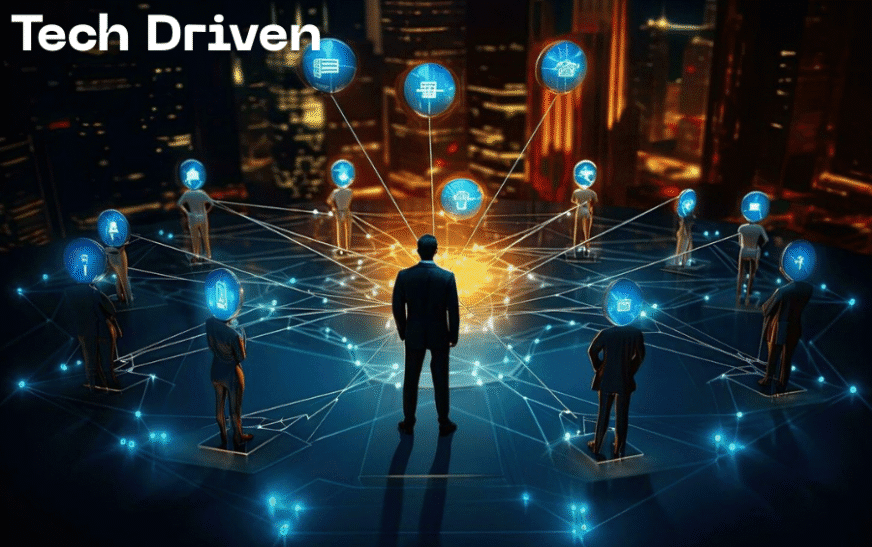
Hello people! What part do social needs and values play in the advancement of current technology?
Innovation might create a sense of logical revelations, but as a matter of reality, it is significantly influenced by society. The subject of Tech as Socially Driven talks about how mechanical advancements are decided and how they advance towards a particular course through societal needs, social convictions, economy, and legislation.
From ancient times, when individuals created tools to make their lives more comfortable, to the present day, where technology helps people lead lives as they desire and need, the same phenomenon has emerged: Innovation has consistently responded to human needs. Any development is started by a purposeful establishment on the issues or wants of society. The information around such a relationship makes a difference in realizing that innovation is not a forlorn animal but an energetic expression through the individuals who construct and expand it.
Let’s dive in!
Table of Contents
Basics of Social Forces
Social strengths are characterized as a few powers that happen due to the interaction of men, teaching, and society.
- Traditions and culture
- Policies and political power
- Systems and financial needs
- Social developments and the supposition of the masses
- Learning and socialisation
- Population developments and demographic changes
- These powers coordinate the innovative needs, and this controls what development will be backed or discouraged.
Tech Molded by Society
- The society has formed its innovation history.
- Printing Press (15th Century) was a response to tall education and devout reform.
- Industrial Transformation: It is caused by a deficiency of labor and requests in the showcase in the 18th century in Europe.
- It was created to reply to communication requests when the trade was spreading in the 19th century.
- Cold War legislative issues and the scholarly world, combined with the need for high-speed transmission of information, led to the development of this kind of Internet.
- Vaccines and Open Wellbeing Tech, in response to the world’s wellbeing emergencies and social pressures of safety.
- Not as if a specialized ability is inserted in each innovation, but moreover the social setting of the time.
Culture Forming Modern Technology
- Technological selection or dismissal is commonly required and/or motivated by social values and beliefs.
- Western societies are slanted to collectivism and creativity.
- The social orders of the East can be more interested in the collective, great, and all-inclusive agreement with nature.
- The devout see may influence the demeanor toward biotech or AI.
- Software plan and client interface are impacted by dialect and styles of communication.
- Technology has to coordinate the traditions of individuals in order to be grasped.
Financial Impact on Technology
- Economic prerequisites are a few of the most prominent social strengths that consider technology.
- Competition and want to make cash make capitalism drive innovation.
- The communist forms tend to concentrate on social benefit and populist access.
- The powers of supply and request decide which high-tech is mass-produced.
- Automation and mechanical plans are caused by labor shortages.
- The causes of such marvels are globalization, which makes companies come up with items that are absorbable everywhere.
Government Control and Tech
- Technological improvement is guided by governments.
- Policies and directions may repress or energize a few tech.
- Money and endowments go to such businesses as green control or space technology.
- GPS, rambles, and the web have been on the driving edge since the interest that the military had in the technology.
- A universal contention characterizes the national-tech technique (U.S. vs. China).
- Intellectual property rights guarantee that trend-setters are subsidized or that there are hindrances to sharing.
- Technology is advanced or ruined, according to the national interface, as expressed in the political agenda.
Learning and Rights to Information

- The accessibility of instruction to the masses is a significant aspect in the improvement of technology.
- The deterrent to receiving unused apparatuses is proficiency levels.
- The STEM instruction gets development and high-tech jobs.
- The computerized incorporation activities are replied to by online learning platforms.
- Innovation happens in colleges and think tanks.
- Even the advancement of innovation is democratized by open-source communities.
- The social orders that are more taught in society have higher chances of improving and bringing up modern tech.
Social Developments and the Spirit of the Times
- Grassroots developments and a society of opinion foster technological awareness.
Searching to utilize renewable energy tech, the natural developments constrained their policy. - The talk about observation and information security can be impacted by the respective rights groups.
- Advocates of individuals with disabilities receive comprehensive accommodation and adaptive technology.
- The moral concerns of AI and social media are slanted and youth-led.
- Sustainability and morals in generation are caused by shopper demand.
- Issues such as the use of tech are often faulted on the enterprises and governments.
Innovative changes in Crises
- Significant emergencies more often than not prompt innovation to react more quickly to the pressing demands.
How pandemics have incited the advancement of telemedicine, innovations of antibodies, and wellbeing following applications. - The wars significantly advanced radar, atomic innovation, and logistics.
- Cost-saving development and robotization happened as a result of the financial recession.
- Climate emergencies lead to speculation about climate-resistant technology.
- The rise of vitality emergencies speeds up the developments toward renewable sources and efficiency.
- Innovation is made as a result of an emergency when life or an alter is at risk.
Populace and Moving Social Demands
- The birth rates and passing rates require mechanical innovations.
Due to maturing populations, there is a growing demand for wellbeing tech and caregiving robots. - The more seasoned fashion of foundation required by urbanization is keen city infrastructure.
- Young individuals are thrusting versatile innovations, gaming, and online shopping.
- The relocation designs influence the dialect interpretation tech and the worldwide logistics.
- The suggestions of sexual orientation are impacting the plan in wellbeing innovation, wearable innovation, and workstation tools.
- Technology has to be balanced to those individuals whom it serves- and their numbers, needs, and characteristics.
Pop Culture, Media, and Perception
- Technology is depicted in a certain light that determines how individuals expect to live and accept it.
Science fiction has come about in real life (e.g., tablets, voice assistants). - Cinema and TV make fear or trust in the AI and robots.
- Influencers influence tech items, patterns, and advertise adoption.
- Hype cycles and deception are accelerated through social media.
- Publicizing directs the discernment of the goodness and advancements of innovation among the population.
- Pop culture helps in characterizing tech as being unsafe, supportive, or progressive.
Ethics of Technology
- Moral frameworks are created to set up boundaries of innovation by societies.
Surveillance and business debate are discussed in the speculations of AI ethics. - The bioethics issue tests the boundaries of cloning, altering of qualities, and organ transplants.
- Screention, information security, and children’s innovation raises questions about screen time and information security.
Digital Privacy Rights
- Designed to cause moral wrangles around the world, independent weapons will play an essential part in blending moral issues with military applications.
- Social standards put the boundaries between what constitutes an acceptable use of a modern apparatus.
Social Drivers of Smartphones
- The worldwide spread of smartphones reflects different social influences.
Need for portable communication due to worldwide workforces and families. - Youth request social media and entertainment.
- Government speculation in portable infrastructure.
- Marketing and social patterns form phone plans and use.
- Economic growth is driven by cheap labor in developing countries.
- Smartphones are not just a technological advancement—they are a social phenomenon.
Renewable Energy’s Global Rise
- Renewable vitality innovation has been molded by public opinion and activism.
Climate alter mindfulness pushed governments toward feasible solutions. - Economic motivations like access to credit made solar affordable.
- Protests against fossil fuels forced companies to transition.
- Youth and innate voices drive grassroots supportability campaigns.
- Energy autonomy objectives moved national policies.
Solar boards and wind turbines are results of society-driven innovation.
Social Forces Fuel Misinformation
- AI reflects profoundly implanted social objectives and anxieties.
Efficiency and cost-saving in commerce drive AI adoption. - Concerns almost always call for reasonableness and transparency.
- Military and reconnaissance units utilize raised respectful freedom alarms.
- Job relocation fears fuel retraining and instructional reforms.
- Calls for direction develop from citizens, not fair scientists.
AI is a reflection of human aspiration, caution, and structure.
Social Forces Shaping Innovation
- Social flow directs a technology’s creation, spread, development, and decline.
Innovation stage: Needs and dreams drive invention. - Adoption stage: Social values and the decision to spread.
- Maturity stage: Society coordinating the tech into day-to-day life.
- Resistance stage: Developments challenge hurtful uses.
- Replacement stage: Modern social needs trigger development again.
Global Social Tech Influences
- Different locales shape and utilize innovation based on special social contexts.
China: Government control guides tech improvement (e.g., facial recognition). - USA: Advertise request and capitalism thrust innovation.
- Europe: Morals and human rights shape administrative tech.
- India: Socioeconomics and financial development drive the growth of versatile fintech.
- Africa: Social needs guide versatile keeping money and vitality access.
Technology is not universal—it’s socially constructed.
Can Innovation Alter Society in Return?
- Yes—technology moreover reshapes society in a critical loop.
Social media modified communication and political engagement. - Electricity re-imagined domestic life and productivity.
- Transportation reshaped cities and globalization.
- Healthcare tech changed life expectancy and wellness culture.
- Work-from-home apparatuses changed work markets post-pandemic.
- Social strengths make innovation, and innovation, in turn, changes society.


Conclusion
Technology is not an separated drive; it reflects the needs, desire, and challenges of society. Each development starts with an issue individuals look to address, and from communication instruments to healthcare breakthroughs, it is society that sets the direction. The pace of innovative development is tied closely to human demands with social requests forming the needs of analysts and designers.
Open supposition can quicken or moderate certain developments, whereas moral contemplations regularly emerge from shared values. Without societal input, innovation risks becoming disconnected from genuine needs, but when consideration is grasped, it benefits a more extensive range of individuals. Social standards influence how innovation is defined and adopted, and addressing global challenges like climate change drives economic solutions. Collaboration between technologists and communities fortifies significance and belief, making society-driven innovation more broadly acknowledged.
Open talk also influences subsidizing and approach choice, whereas cases of mechanical abuse start pushback and requests for direction. Instruction plays a key part in enabling society to direct innovation admirably, and worldwide participation can adjust innovative development with shared human objectives. As society advances, so does its vision for innovation, in a persistent cycle where each shapes the other. Eventually, innovation and society shape an energetic partnership—one that will characterize the course of our future. How can society direct innovation toward moral, comprehensive progress?
FAQS
1. What are social powers in technology?
Social, political, and financial impacts direct mechanical advancement and use.
2. How does society influence mechanical development?
Society’s needs, values, and patterns manage tech creation and adoption.
3. Can open supposition halt a technology?
Yes, social weight can limit hurtful or questionable technologies.
4. Does each innovation reflect a social need?
Most developments start as arrangements to address genuine social problems.
5. Can culture dismiss unused technology?
Yes, social convictions regularly impact tech resistance or acknowledgment.