

Hello people! How did the Mongols impact and utilize Central Asian logical advancements?
We ought to begin by analyzing Mongol Empire history, not merely as a brutal conqueror, but also as a group that adapted well, was effective, and retained knowledge from outside its culture. Or maybe then, as it were, plundering as they voyage, the Mongols acknowledged mastery and innovation, particularly in the Middle East, at the height of Islamic culture.
This article aims to discover what the Mongol Domain did with the Central Asian—mainly Islamic—technological, logical, and regulatory advances during the Golden Age. To be more particular, by “Central Asian innovation,” here we refer to the improvements in science, building, military methodology, and running governments that emerged in and around Persia, Mesopotamia, Syria, Egypt, and the driving centres of the Islamic world at that time.
The scene for this assembly was arranged when Hulagu Khan conquered the Middle East, and Baghdad was sacked in 1258. Whereas things looked distressing through the pulverization, after these occasions, the Mongols showed a viable side by making use of the people’s information. In the Ilkhanate of Persia, they worked to utilize Central Asian innovation to govern effectively, reinforce their military, and increase their notoriety.
It wasn’t only moderate learning; this methodology intentionally included Central Asian subjects, giving rise to a particular consolidation of Mongol and Central Asian wisdom that made a difference in sharing information and conventions in Eurasia.
In this article, we’ll investigate this handle profoundly, centering on the key figures, the primary advances spread, why the changes happened, and the enduring impact, while noting that it included smooth absorption as well as major constraint and upsetting adaptation.
Let’s dive in!
Conquest, Devastation, and Pragmatism
Mongol Victory: Nature Explored
-
- Pay consideration to the extreme harm done to cities, water frameworks, and centres of learning (an illustration is the devastation of Baghdad).
-
- Was devastation ahead of the troops continuously thoughtlessly done, or, in a few events, a choice made for military procedure (such as breaking through enemy resistance or clearing a path)?
-
- Psychological Fighting: How fear was a part of each Mongol attack.
Muslim World’s Most Noteworthy Heights
-
- A careful look at what science, medicine, cosmology, designing, and craftsmanship were like in the Islamic world, far back in time, and the Mongol invasions.
-
- Important centres at the time were Baghdad, Damascus, Cairo, Isfahan, and Maragheh.
-
- What Libraries and Clinics Do? They collect, secure, and include in our knowledge.
-
- Rigorous Organization: State organization, collection of charges, and a postal benefit framework (braid).
Pragmatic Approach to Outside Advisors
-
- As long as the Mongol Empire remained steady, much appreciated for its early victories, each viewpoint of life in Asia benefited from more prominent exchange and mental exchange.
-
- Lack of Devout or Social Predisposition: The Mongols more often than not did not care about devout or social issues so long as unused hones made a difference to them.
-
- The Mongols would select qualified individuals from winning people groups (including those with designing, creative, grant, and marketing capacities) to connect them.
-
- China’s Yuan Line, moreover, affected the Ilkhanate (but this exposition concentrates on the fundamental Central Asian impacts on the Mongols, so cross-cultural issues are said, as it were, briefly).
Time of Ilkhanate Context
-
- How and why Hulagu Khan Established the Ilkhanate in Persia and Mesopotamia.
-
- How Mongol rulers, before long, concluded that they had to utilize established regulatory, agricultural, and city organization frameworks to oversee settled and advanced societies.
Evolution of Military Technology
-
- First, there was an attack, accompanied by supportive design approaches.
-
- At the start, noteworthy numbers, extemporized attack weapons, and diversion were the essential attack tactics.
Advances from the Middle East
-
- The first European adaptations of the trebuchets/mangonels were more carefully outlined than the early Mongol ones.
-
- What is known nowadays as fossil fuel was utilized as a fuel for blazing shots, and “Fire-Stones,” along with comparable Greek fire items, were used.
-
- Experiencing progression in how Attack Towers, Battering Rams, and Mining were utilized strategically.
Mongol Adjustment and Transformation
-
- Bringing engineers from the places they prevailed had a noteworthy impact.
-
- The Mongol “Gunnery Corps”: How units were made that depended on talented engineers from numerous corners of the empire.
-
- Baghdad, Alamut, and Maimundiz were cases of Mongol authority in attack and battle, an aptitude learned from Central Asian and Chinese help.
-
- The spread of these abilities throughout the Realm, as well as how they were shared in places like Central Asia and Eastern Europe.
Gunpowder Roots and Early Shots

Recognize that it is likely that the Chinese designed gunpowder.
Contributions From the Middle East
-
- Building superior and prior rockets (fire bolts) took place at this time.
-
- In early times (midfa), a few utilized simple bronze or press channels as tubes for terminating projectiles.
-
- Incendiary Shells and Explosives: Modern, progressive compositions were used.
Mongol Integration
-
- Europe was presented with black powder information since the Mongols empowered its spread, despite not utilizing it themselves in their major European campaigns.
-
- Among their successors, the Ilkhanate and Brilliant Crowd utilized superior sorts of explosive weapons, demonstrating they excelled in unused technologies.
-
- Mixing Chinese Skill information from both East and West is combined.
Armour and the Making of Metal
-
- Mail, lamellar, scale, and progressed steel were spoken of in Central Asian armour.
-
- Because ordinarily Mongols favored calfskin and lacquered defensive layer, they likely started utilizing better sorts of metal and presented a heavier protective layer for watch troops and used in sieges.
-
- Advanced Heaters Superior ways to make heaters, made strides howls, and made strides casting techniques.
-
- Limited maritime innovation was utilized, but it played a part in the war.
-
- Skilled shipbuilding and route are the fundamental characteristics of the Center Eastern sea-equipped forces.
-
- Mongols in Persia wished to make armadas for use in the Inlet and Caspian oceans and enlisted the offer of assistance of nearby specialists and seafarers. I did not accomplish a parcel, but it appeared that I was willing to learn.
Administration and Realm Building
The first branches were Space Science and Mathematics.
The observatory at Maragheh
-
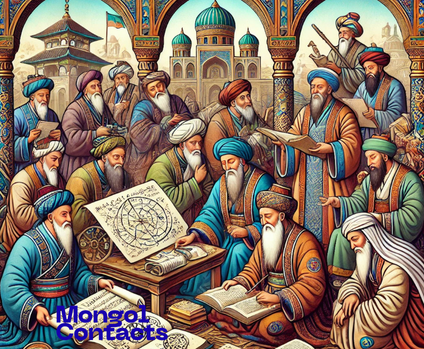
- Hulagu Khan upheld Nasir al-Din al-Tusi and made a significant contribution to the construction of one of the world’s most renowned observatories in his era.
-
- To finish this, the Ilkhanids created and overhauled cosmic tables, utilized them to foresee ethereal episodes, and might have ventured into the world of navigation.
-
- Scholars considered together from foundations that included Persians, Middle Easterners, and Chinese.
Scientific Achievements of Islam
-
- Quadrants: A depiction of these four disobedient, remarkably, the progressed persuades, illustrating the contrasts between them.
-
- Impact: He made critical commitments to circular trigonometry, considered modern sorts of planetary conditions, and passed this data on to subsequent space experts (Copernicus learned from Ibn al-Shatir’s followers).
-
- New Math: Holding to the decimal framework, progressing polynomial math, trigonometry, and calculations required for work in organizations and astronomy.
Cartography and Geology: Importance
-
- Advanced Maps of Islamic Universes, creation of world maps, maps of neighborhood ranges, and charts supportive for navigation.
-
- In Mongolia, topography is utilized for arranging fights, dealing with assets, and exploring all through the country—the effort of Rashid al-Din in collecting information around the world.
-
- The “Mystery History of the Mongols” and the maps I used.
Medicine and open health
-
- Muslim Therapeutic Convention, cutting-edge clinics, drugs, surgery, and therapeutic books.
-
- Signs of Mongol rulers supporting specialists and healthcare centers can be found.
-
- They took note and paid consideration to illnesses such as the torment and likely took restorative counsel and methods from Central Asian sources for their vast armies.
Methods for Bureaucratic Management
-
- A Finely Sharpened Islamic Organization: Muslims made significant progress in recording charges, lands, populations, and documents.
-
- Mongol Crave framework for overseeing settled individuals and collecting tribute from them.
-
- The Ilkhanate acted in Persia by primarily utilizing and changing the working of existing government systems.
-
- Shams al-Din Juvayni, chief vizier, and Rashid al-Din Hamadani were competent Persian administrators who worked under the Ilkhanids.
-
- Postal Framework (Yam) Mongols made up the essential culture of the framework; however, they likely borrowed components of quick data and framework from Central Asian systems.
Coinage and Overseeing the Economy
-
- Islamic Numismatics: Stamping forms, orchestrated coins, and coins struck with gold and silver.
-
- The Ilkhanate based its cash on Central Asian plans and commonly utilized Persian engravings to stabilize its economy and make trade easier.
-
- Paper Cash (Chao) China concocted this frame of cash. Still, indeed, even though its use in the Ilkhanate didn’t last, it demonstrated that the rulers were open to testing unused monetary thoughts from the outside.
-
- Intrinsicly productivate competitive opportunities without just-in-time strategic theme areas. Holistically Empire’s Civilian, Rural Tech
The exercises in this zone are Farming and Irrigation
-
- Advanced strategies in Islam utilized a satisfactory water system (through qanats and canals), which would alter the arrangement of crops planted, and supported this with information from agricultural books.
-
- At the beginning, the Mongols caused critical harm to water system frameworks (such as in Mesopotamia).
-
- By the late Reclamation and Speculation periods, it was clear to the Ilkhanate that for solidity and cash, agriculture required a superior water system, so they worked to settle and construct water systems.
-
- Traffic of Ranches and Strategies: The empire’s sharing of unused crops and methods.
-
- Building plans and arrangements are a central part of urban societies.
-
- Modern Center Eastern cities highlighted progressive styles in the nation’s development, city plans, and water provision.
-
- The Mongols regularly combined diverse styles, contracting Central Asian planners, engineers, and artisans to develop mosques, royal residences, and government buildings, such as the one in Soltaniyeh.
-
- Use of Coated Tiles, Arches, and Curves, and integration of these specific building elements.
Textiles and Makes are both critical.
-
- Outstanding Material Producers: Silks, carpets, and an assortment of weaves are produced.
-
- Expert in making metal things from brass, copper, and valuable metals.
-
- Glazed and brightened ceramics are highly sought after.
-
- When the Mongols prevailed, they moved artisans from other lands to their capital and remunerated them with devices or materials to make merchandise for their first class and advertise. As a result, individuals in diverse groups may receive unused styles and approaches.
Creation of paper and making books
-
- Islamic Paper Plants Innovation from China was presented, and at that point, encouraged improvement.
-
- Bookbinding and Light are well-developed sorts of art.
-
- Establishing libraries and making records were key reasons for Mongol rulers to utilize and boost nearby Central Asian book production.
Roads and Foundations Affect Communities
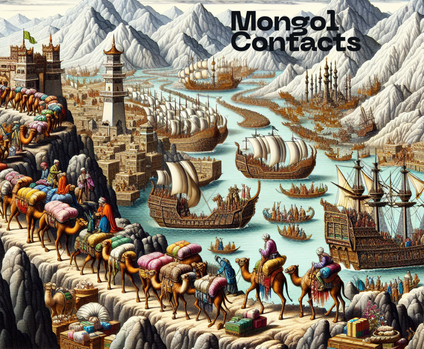
Although the Mongols took part in ancient exchange courses, they may have also utilized Central Asian trade and coordination mastery to create their successful communication framework (yam).
Adoption: Reasons and Process
-
- To make superior choices, individuals tend to relate thoughts to the planning reason, or they judge things by their utilitarian outcomes.
-
- Mongol reasoning is summed up by the saying, “What Works, Wins.” If something worked well for the military, government issues, or collecting riches, they would adopt it, regardless of who made it.
-
- Sedentary, urbanized life made it clear that migrant strategies may no longer work as a rule of rule.
Skilled Staff in Cooperatives
-
- Sending captured artisans, engineers, researchers, and directors intentionally to Mongol centres (like Karakorum and afterward Tabriz) was a visit arrangement of the Mongols.
-
- The Mongols allowed bolstering, supplies, and popularity to the intelligent men and ladies working at their court (e.g., Nasir al-Din al-Tusi).
-
- Because the Mongols were not accustomed to settling government and innovation, they required the information of foreign experts.
-
- Trade and Trade Systems are a part of C.
-
- Because of the Pax Mongolica, the steady domain permitted individuals and products to move and thoughts to be shared securely over huge regions.
-
- The Silk Road has made it conceivable for innovation to spread once more among different countries.
Culture and Judgment Skills Categories
-
- Despite more often than not being commonsense, a few Mongol rulers, such as Hulagu Khan, uncovered an honest-to-goodness interest in science, conceivably due to their Persian advisors.
-
- Mongol settlement in the Middle East for extended periods brought social blending, which smoothed the process of exchanging technology.
-
- What are the key facilitators?
-
- With the assistance of men like Rashid al-Din Hamadani and Shams al-Din Juvayni, the Mongol heads worked harder to set up Central Asian frameworks in their lands.
-
- Thanks to the Mongols, in places beneath their control, researchers like Nasir al-Din al-Tusi were able to do more of their work.
-
- Some devout resistance for Nestorians and Buddhists has permitted a certain amount of exchange.
Islamic Ideas’ Eurasian Affect Legacy
-
- How the Ilkhanate was influenced by the war.
-
- It was imperative for the Ilkhanate that the changed rules and unused rural homes made a difference in revamping the economy.
-
- Although the Ilkhanate began out damagingly, there was a moderate restoration of Persianate culture and science, essentially through Mongol support.
-
- Mongols, Persians, and Muslims came together to make a one-of-a-kind fashion of Ilkhanid culture.
Mongol Run the show Spread Inventions
-
- East-West Exchange: Explosive printing and compass, all innovations from China, progressed through the Middle East, much appreciated by the Mongols, and then came to Europe.
-
- West-East Exchange: The exchange of Central Asian innovation, such as cosmic gear, water clocks, and organizational frameworks, from Central Asia into China and the Mongol Empire under the Yuan Dynasty.
-
- Mix of Information: Making unused gadgets or combining more seasoned ones by utilizing information from different world regions.
Global Affect Illustrations Continued
-
- Astronomy: The impact of the Maragheh grant on later stargazers who came from Europe (a few of them using mediators from Byzantium).
-
- Paper Cash (in spite of not working out in Persia): Its impacts on a bigger scale in history.
Blockchain Selection Challenges
-
- The Mongols didn’t continually adjust to inventive advances, clearing out urban living and sedentarization for their elite.
-
- Not all prevailing populations chose to acknowledge the rules of the conquerors.
-
- The Mongol Realm eventually crumbled, which was anticipated by its lack of an enduring, joint effect.
Lasting Impacts of Mongol Contacts
-
- Turning from something harming to something that energizes exchange.
-
- An unused format of innovation over Eurasia.
-
- The portion secretly supported exercises played in supporting logical and innovative accomplishments, indeed, when another nation was the ruler.
Conclusion
First, clarify that there was much more to their relationship than fair Mongolians winning over the Middle East.
The relationship started due to a struggle and was fortified by the requirement for interaction. Affirm the proposition by expressing that the Ilkhanids were shrewd and experienced makers of arrangements who recognized the Islamic world’s prevalent aptitudes and apparatuses. Taking on and utilizing these developments was fundamental to their government, military, and the enduring wellbeing of their realm in the locale.
Highlight the Fundamental Regions of Appropriation: Briefly discuss the basic zones of change brought by necessities: The military had advances in attack innovation and too early adaptations of explosive arms. Logical: Space science, arithmetic, and cartography, best known through the work done at the Maragheh Observatory. Bureaucracy, charges, and overseeing the nation’s economy are key components of an authoritative focus.Civil/Agricultural: The utilization of water systems, city and town planning, and talented people. Proposes that the exchange associations of “Pax Mongolica,” along with the dynamic backdrop of gifted laborers and rulers, drove the trade of unused thoughts.
The worldwide impact of the Mongols ran the show, and their part as a means for the transport of innovations (Central Asian and Chinese) over a vast zone of Eurasia afterward played a massive role in historical events in Europe and Asia.
It’s critical to point out that selection was common, even though a few groups or areas weren’t completely part of it. Once the domain was entirely separated, this also implied that the primary mechanical advancements became more constrained over time.
The Union proceeds to hold nowadays what it produced during this period. The Mongol Domain illustrated how war can suddenly energize distinctive societies to learn from one another, share developments, and reevaluate thoughts that drive changes over the globe. It lets us know that developing forward as a rule includes both tearing things down and taking in perspectives we were not anticipating. How did Mongol integration affect Eurasian innovation and culture?
FAQS
1. What is Central Asian innovation in the Mongol context?
Scientific, designing, and regulatory advancements from the Islamic Brilliant Age lands.
2. Did Mongols crush or receive Central Asian technology?
They embraced it deliberately, mixing it with their systems.
3. Why did the Mongols esteem Central Asian technologies?
For administration, military, social glory, and effective administration.
4. How did the Mongols spread Central Asian innovation over Eurasia?
Through successes, exchange systems, and migration of gifted workers.
5. What effect did this have on Eurasian civilizations?
It cultivated innovative trade, development, and social change over districts. The real estate business is a dynamic and exciting industry that offers a range of opportunities for those who are willing to invest their time, effort, and resources into it.